
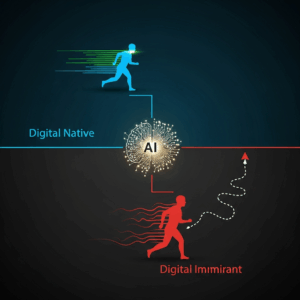
 The rapid development of educational technologies has profoundly transformed teaching processes and reshaped teachers’ pedagogical approaches. Artificial Intelligence (AI)-assisted teaching tools offer significant advantages, such as creating individualized learning environments, providing automated assessment systems, and reducing teachers’ workload.
However, adaptation to these technologies is not uniform among educators; factors such as individuals’ age, familiarity with technology, and pedagogical habits are determining factors in this process. The concepts of Digital Natives and Digital Immigrant teachers provide a vital framework for understanding this divide. While Digital Natives can easily integrate AI-supported teaching tools into their practices, Digital Immigrants often struggle due to a lack of technical knowledge and adherence to traditional teaching methods.
The Research Approach
A study analyzing this generational gap utilized a mixed-methods research design, combining quantitative data (surveys) with qualitative data (interviews and classroom observations). The research examined the adoption processes of AI tools among 113 teachers working at primary, secondary, and higher education levels in Türkiye.
Participants were categorized into two main groups:
- Digital Natives: Teachers born after 1980 (ages 25-40).
- Digital Immigrants: Teachers born in 1980 or earlier (ages 41+).
The Digital Divide: Usage and Perception
The study’s findings reveal a significant generational gap in the adoption of AI technologies. Digital Natives adapt to AI-supported teaching methods faster, reflecting their higher levels of technological familiarity and confidence in integrating AI into their teaching practices.
Key Usage Differences:
| AI Tool | Digital Natives (%) | Digital Immigrants (%) |
|---|---|---|
| AI-powered content production | 72% | 34% |
| Automated student assessment systems | 65% | 29% |
The differences in AI use were found to be statistically significant. Digital Natives utilize AI-based content production, student assessment, and data analysis tools more frequently.
In terms of perception, the gap is also stark: 82% of Digital Natives reported that AI-powered teaching tools made their lessons more effective, compared to only 38% of Digital Immigrants. Digital Natives believe AI enhances student motivation and supports individualized learning. Conversely, Digital Immigrants often express concern that the increasing use of AI may weaken the traditional teacher-student relationship.
Core Challenges in AI Integration
Despite the potential for AI to enhance student achievement and reduce teacher workload, the integration process faces several challenges, particularly for Digital Immigrant teachers:
| Difficulty Type | Digital Natives (%) | Digital Immigrants (%) |
|---|---|---|
| Lack of technical knowledge | 28% | 76% |
| Pedagogical adaptation of AI tools | 42% | 69% |
| Lack of time to learn AI tools | 31% | 65% |
| Data privacy and security concerns | 35% | 58% |
A lack of technical knowledge is cited as the most significant barrier for Digital Immigrants. They also report greater difficulty in pedagogically adapting AI tools to their lessons and struggle with time management required to learn and integrate new technologies.
Strategic Recommendations for Sustainable Transformation
The effective and responsible integration of AI technologies requires systemic support mechanisms targeting all generations of teachers.
Teacher Training and Support:
- Strengthen Training Programs: Comprehensive teacher training programs, including hands-on workshops and certification programs, should be developed, focusing on the practical classroom applications of AI tools. These are especially vital for Digital Immigrant teachers to help them build confidence and competence.
- Establish Mentoring: Mentoring and collaboration systems should be encouraged, pairing technologically proficient Digital Native teachers with Digital Immigrants to promote knowledge exchange. A “Technology Leader Teacher” model should be implemented to guide colleagues.
- Technical Support: Dedicated technical support units must be established within schools to provide ongoing guidance and troubleshooting assistance to teachers using AI-based tools.
Policy and Ethics:
- Policy Restructuring: Educational policies must be restructured to align with AI-supported pedagogical transformation, establishing guidance mechanisms and frameworks for implementation.
- Ethical Standards: Clear national standards and comprehensive regulations must be developed to ensure the ethical and safe use of AI in education, prioritizing data privacy, algorithmic transparency, and student data protection. Teachers and students must be educated on how AI systems handle data.
- Improve Infrastructure: Internet connectivity and access to digital devices need to be expanded across all institutions to ensure equitable access to AI tools.
Conclusion
While Digital Natives show a natural advantage in adopting AI tools, the sustainable success of AI in education depends on strengthening the technical and pedagogical competencies of all teacher generations. AI tools offer crucial benefits by enhancing individualized learning, reducing workload, and promoting interactive teaching strategies.
However, to maximize AI’s potential, its use must be balanced with pedagogical flexibility and designed to support critical thinking, ensuring that AI serves as a complementary tool that enhances, rather than diminishes, the human elements of teaching and learning.